A garage door spring is the hardest-working part of your entire door system. Every time the door goes up and down, the springs do the heavy lifting, counterbalancing a panel that can weigh anywhere from 150 to over 350 pounds. So when a spring breaks, you know it. Suddenly the door won’t budge, the opener strains and beeps, and you are stuck blocking your own driveway in Riverside or wherever you happen to be across the Inland Empire.
If you are dealing with a broken garage door spring right now, the most important thing to understand is this: spring replacement is one of the few garage door repairs that is genuinely dangerous to attempt yourself. This guide from Electra Gate Solutions explains how to recognize a broken spring, the difference between torsion and extension springs, why a professional should handle the fix, what affects the cost, and what to expect when a technician arrives.
How to Tell If Your Garage Door Spring Is Broken
Springs usually fail without much warning, but the symptoms are easy to spot once you know what to look for. If you notice any of these signs, treat it as a broken spring until a professional confirms otherwise:
- A loud bang from the garage. When a spring under tension snaps, it releases that energy all at once. Many homeowners describe it as a gunshot, a firecracker, or something heavy falling. If you heard a sharp bang and the door stopped working afterward, a broken spring is the most likely cause.
- The door won’t lift, or only rises a few inches. Without a functioning spring, your opener simply isn’t strong enough to raise the full weight of the door. The motor may hum, strain, or reverse, but the door barely moves.
- The door looks crooked or hangs unevenly. If one side drops lower than the other or the door appears tilted in the tracks, a spring (or cable) on one side has likely failed.
- A visible gap in the torsion spring. Look at the spring mounted on the metal shaft above the door opening. A healthy torsion spring is a tight, continuous coil. A broken one will show a two- to three-inch gap where the coil separated.
- The door slams down or feels extremely heavy. If you try the manual release and the door crashes down or feels like dead weight, the counterbalance is gone. Stop and keep hands and feet clear.
If your door is stuck in the down position, that is actually the safest place for it to be. Avoid forcing it open and don’t repeatedly run the opener, which can burn out the motor or damage other parts.
Torsion vs. Extension Springs: What’s the Difference?
Garage doors use one of two spring systems, and knowing which you have helps you understand the repair.
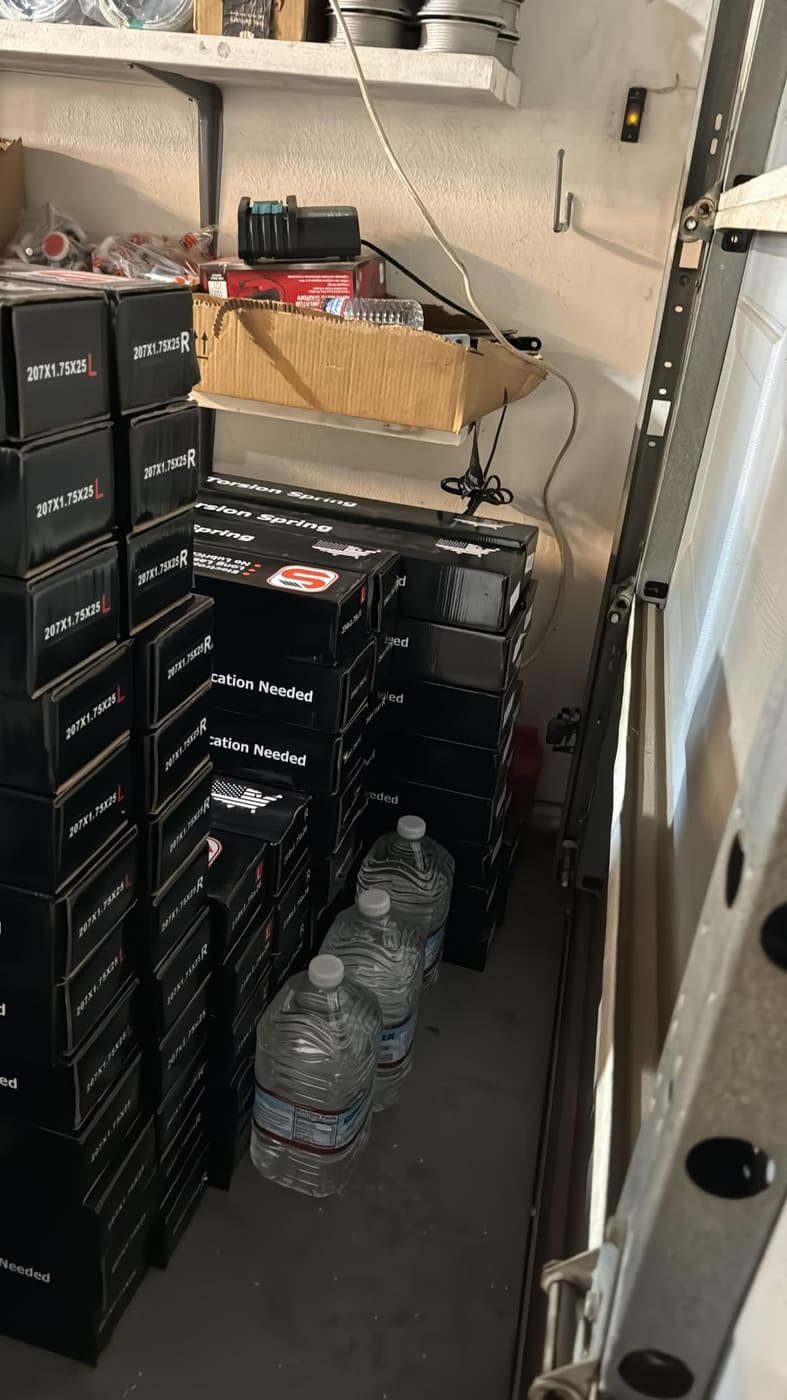
Torsion springs are mounted horizontally on a metal bar above the door opening. As the door closes, they wind up and store energy; as it opens, they unwind to lift the weight. Torsion systems are common on modern and heavier doors, tend to last longer, and offer smoother, more controlled operation. Most homes throughout Riverside, Corona, and Rancho Cucamonga that were built in the last few decades use torsion springs.
Extension springs run along the horizontal tracks on either side of the door and stretch and contract to provide lift. They are often found on older or lighter single-car doors. Because they expand and release with force, properly maintained safety cables are especially important so a broken spring can’t become a projectile.
Both types serve the same purpose, but they fail differently and require different parts and techniques to replace correctly. A technician will identify your exact system and match the right spring to your door’s weight and size.
Why DIY Spring Replacement Is So Dangerous
We are big believers in homeowners handling small projects, but garage door springs are the exception, and it is important to be honest about why.
A torsion spring stores an enormous amount of energy when wound. If that energy is released suddenly, while loosening hardware, with a slipped tool, or because the wrong winding bars were used, it can cause serious injury to hands, face, and eyes. Extension springs carry the same hazard if a safety cable is missing or worn. Every year, well-intentioned DIYers end up in emergency rooms because a spring or tool let go unexpectedly.
Beyond the immediate danger, springs must be precisely sized and balanced to the weight of your specific door. The wrong spring, or one wound to the wrong tension, leads to a door that opens too fast, slams shut, wears out the opener, or fails again within months. Professionals also have the correct winding bars, clamps, and replacement components on hand, which most homeowners simply don’t.
The bottom line: a broken spring repair is fast and routine for a trained technician with the right tools, and risky for almost anyone else. This is one job worth handing off. For your safety, we don’t publish step-by-step replacement instructions, and we encourage you to call an insured pro for garage door spring repair instead.
What Affects the Cost of Garage Door Spring Repair
Every door is a little different, so the honest answer is that pricing varies. That said, a few factors drive the cost of a spring repair, and understanding them helps you avoid surprises:
- Spring type. Torsion and extension springs are priced differently, and heavier-duty or high-cycle springs that are built to last longer cost more up front.
- Single vs. double spring setup. Many doors use two springs working together. When one breaks, the other is usually the same age and close to failing, so replacing both at once is common and prevents a second service call soon after.
- Door size and weight. Larger two-car and oversized doors need stronger springs, which affects parts pricing.
- Labor and related parts. If cables, rollers, or the center bearing are worn, addressing them during the same visit is more efficient and protects the new spring.
- Emergency or after-hours service. A standard daytime appointment may differ from a late-night emergency call-out.
At Electra Gate Solutions we provide free, upfront quotes before any work begins, so you know exactly what to expect, and we offer discounts for new customers, seniors, and veterans across the Inland Empire.
How Long Springs Last and How to Make Them Last Longer
Most garage door springs are rated by cycles, with one cycle being a single open and close. A typical spring is rated for roughly 10,000 cycles, which often works out to somewhere between seven and twelve years depending on how much you use your door. A household that opens the door several times a day will naturally wear through that lifespan faster than one that uses it occasionally.
You can’t make a spring last forever, but good maintenance helps you get the most out of it and catch problems early:
- Listen and watch during operation. New squeaking, grinding, or jerky movement is worth investigating.
- Have the springs and cables lubricated with the proper garage-door lubricant during routine service.
- Test the door’s balance periodically (a technician can show you how) so the springs aren’t overworked.
- Schedule an annual garage door maintenance tune-up. Inland Empire heat, dust, and temperature swings are hard on hardware, and a yearly inspection catches wear before it becomes a breakdown.
If your door is more than a decade old and you have never replaced the springs, it is reasonable to assume they are nearing the end of their life.
What to Expect From a Professional Repair Visit
When you call us for a broken spring, the visit is usually straightforward. An insured technician will inspect the door, confirm the failed component, and check the cables, rollers, bearings, and overall balance so the same issue doesn’t repeat. You will get a clear, upfront quote before any work starts. With your approval, the technician installs the correctly sized spring (or springs), winds it to the proper tension, and tests the door through several full cycles to make sure it opens smoothly, closes safely, and is properly balanced. Most standard spring repairs are completed in a single visit, often the same day.
Because a broken spring leaves your garage, and sometimes your car, locked in place, we offer 24/7 emergency garage door repair throughout Riverside, San Bernardino, Ontario, Rancho Cucamonga, Corona, Colton, and Moreno Valley. You don’t have to wait days to get back to normal.
Frequently Asked Questions
Can I still open my garage door with a broken spring?
It is not recommended. Without the spring’s counterbalance, the door’s full weight, often 150 pounds or more, is unsupported, and it can slam down unexpectedly. If a vehicle is trapped inside and you must move the door, have a professional handle it. Otherwise, leave the door down and call for service.
Should I replace one spring or both?
If your door uses two springs, most technicians recommend replacing both at the same time. They share the same workload and age, so when one breaks, the other is usually close behind. Replacing both keeps the door balanced and saves you a second repair visit in the near future.
How quickly can you repair a broken spring in the Inland Empire?
In many cases we offer same-day and emergency service across Riverside and the surrounding Inland Empire communities. Call us with your door’s situation and we will let you know the soonest available appointment and provide a free quote.
Get Your Door Working Safely Again
Stuck with a broken garage door spring? Don’t risk a dangerous DIY fix. The insured team at Electra Gate Solutions provides fast, same-day and 24/7 emergency garage door spring repair throughout Riverside and the entire Inland Empire, with free quotes and discounts for new customers, seniors, and veterans. Call (951) 903-5514 now to get your door working safely again, email [email protected], or request a free quote.